
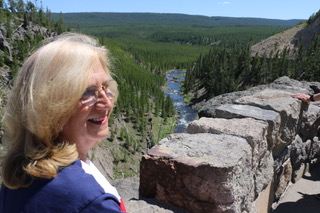
I used to think of dementia as something that only happened in older years, something distant, something that belonged to other people. Not something that happened to 55-year-old me.
When I first began noticing changes in my thinking, memory and especially personality. I felt confusion, fear, and embarrassment. I tried to hide it. I would laugh if I got lost in a familiar area, missed appointments, or forgot how to add and subtract. I told myself it was just stress, or normal aging. But deep down, I knew something was different.
Getting a diagnosis was both frightening and strangely relieving. On one hand, I had a name for what was happening. On the other, I was suddenly placed into a category. I was no longer seen as just “me.” I became a person with dementia.
And that changed how some people treated me.
People began talking around me instead of to me. Decisions were made about my life without asking my opinion. Sometimes I felt invisible, like the diagnosis had erased my voice, my preferences, and my history.
But here is the truth: dementia changes some things – in fact it changes a lot of things, but it does not take away who we are. We are still people with dreams, humor, talents, and wisdom. We still want to make choices. We still want to be part of our families, our communities, and the world around us.
What I have learned is that the biggest challenge is not always the dementia itself. Often, it is how society, family, friends and medical communities responds to it.
Too often, care is done to us instead of with us. People focus on our losses instead of our abilities. They see the diagnosis before they see the person.
What we need is a person-directed approach.
A person-directed approach starts with a simple but powerful idea: ask us. Ask what matters to us. Ask what brings us joy. Ask how we want to live our lives.
Instead of saying, “This is what we do for people with dementia,” say, “What would you like your day to look like?”
Instead of assuming we cannot decide, give us the chance to choose. Instead of focusing only on safety and efficiency, remember dignity, purpose, and connection.
Person-directed care means seeing the whole person, their story, their culture, their relationships, their passions, not just their symptoms.
It means recognizing that even with memory changes, we still have feelings, preferences, and voices that deserve to be heard.
My hope for the future is a world where a dementia diagnosis is not the end of being included. I hope for communities where people with dementia are still invited, still listened to, and still valued.
I hope for doctors who talk with us, not just about us.
Care givers who become care Partners and see our strengths, not just our needs.
Communities that make space for us to continue contributing in meaningful ways.
And most of all, I hope that people living with dementia will be part of the conversation, part of the decisions, and part of the solutions.
Because Nothing About Us without Us should always be the focus of dementia care.
We are not just living with dementia.
We are living our lives.
And we still have so much to give. I hope that the shift will be to see my abilities NOT my disabilities, to see ME and not my dementia.
 Dementia Daze Dosage
Wise, thoughtful, kind words. Thank you. As both a professional (RN) who worked with persons with dementia and the daughter of a mother who died of Alzheimer’s, I sometimes needed to be reminded to see the person and not just the diagnosis. We ALL need to do better at times, I know. Not beating up on myself. Simply being honest.
I appreciate your thoughts.
BTW: I remember you as a child living in Warrington, PA. Fond memories.
Mary Andersen Miner
LikeLiked by 1 person
Thank you. I am glad you found it helpful. If this is the same Mary Lou Anderson, your Mom was my Sunday School Teacher and I adored her!
LikeLike