

Like the waves hitting the beach, life is constantly changing and we are constantly changing with it. Change is an inevitable part of life. We develop, we age. We laugh, we cry. We dislike, we love. And as our lives transform, we either try to deny or resist the change, take action to modify the change, and/or we embrace the transformation and work with (or through) it.
Although there are many things in our lives we can take control of, not all changes can be modified. Not all changes are welcome. There will always be people, circumstances, occurrences and events that we don’t like and don’t want to have invade our perfect world.
For my husband Roy and I, the major changes came in the form of illness. For me, it was a diagnosis of Early-onset Alzheimer’s and Frontal-temporal Degeneration. For Roy, it was a diagnosis of Common Variable Immune Deficiency. Both are life altering medical conditions that have and will continue to impact our plans, dreams and daily activities.
Throughout my life I have always believed in the power of a positive attitude and grasping each challenge as an opportunity. My house, office and car were a collection of positive affirmations like “If I think I can or can’t – I’m absolutely right”, “If it’s to be, It’s up to me”,
“I have a choice – I can let my mind shape me or I can shape my mind” and many more. Mahatma Gandhi’s famous quote outlines how beliefs shape destiny: “Your beliefs become your thought, Your thoughts become your words, your words become your actions, Your actions become your habits, Your habits become Your values, Your values become your destiny”.
Although positive thinking is not always easy, staying in the habit helped me to accept and often excel through some of my more difficult challenges. However, when I was diagnosed with dementia, I found myself drifting away from a positive attitude. I felt that I couldn’t change things and IT wasn’t up to me and I had NO choice. I felt my little engine that once could, had no control to make it up this hill of life. I was becoming sad and depressed.
After my self-inflicted pity party, I realized that I needed to accept my diagnosis and the changes it would bring and make the best of whatever time I could. I found that the stress and worry of denial and non-acceptance was draining what energy I did have.
“Accept what you cannot change. Change what you cannot accept”. After a period of grief, anger, and denial, I began to seek my old self. I found that once I accepted the changes my life was going to take, I began to appreciate the joy and beauty around me. As my stress lessened – my confusion lessed and my energy level increased. The more I embraced the change with a positive attitude, the more Roy and I were able to discover ways to reduce the amount of “dementia daze” (the state of confusion and disorientation) and the more I was able to feel joy again.
To me, embracing change means accepting that it is unescapable and with a positive disposition determining how to make the best of it. Together, Roy and I are learning to embrace our challenges and modify our objectives and our life style. We are finding some of the things that trigger confusion and figuring out ways to overcome the hurdles that prevented me from enjoying life. “I can’t” has become “How CAN I”.
Yes, I still have challenges and days of confusion, disorientation, fear and emotions. However, most of my days are full of purpose and love. While embracing the challenges of change, we are also embracing every moment with joy.
Love & Laugher,
Laurie


 rs squash my dreams! Instead, I will reach for the unreachable star and follow my dreams “no matter how hopeless, no matter how far” (Don Quixote).
 different ways, often pulling files of “things we don’t do” from the back of our brain. Some PWD (Persons with Dementia) get angry, some cry. Some develop inappropriate sexual behaviors and some become violent. Some have trouble with balance and others have trouble with perception. Some drift off to a far away place, while others get stuck in the past. Some symptoms progress quickly and others are gradual. All symptoms eat away at a part of our memory and our past.
 Although the lists, reminders and alarms on my iPad may not always help me stay focused, for now they are helping me stay organized and accomplish my tasks – one at a time. They are helping me to have more “good moments” to sing “I can see clearly now the fog is gone” and for right now, for this special moment – I CAN FLY!
 to take me to two appointments – complete. I felt so accomplished. And then . . .
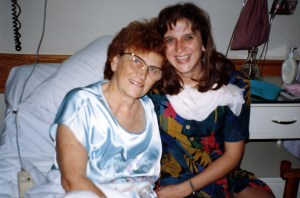 Mom (“Muzzy”) lost her battle with cancer. I miss her – her smile and laugh, her caring attitude and her power of prayer. For 2 years and 6 months, I had the pleasure of being her caregiver. I was the privileged one who got to be with her every day. I believe that journey was preparing me for the journey I now face.
 e a paper folder). Include:
 ure nothing is left behind.
 Dementia Daze Dosage